

An air conditioning emergency is more than a minor comfort issue or an air conditioner that needs routine maintenance. It involves a cooling problem that threatens your safety, damages your home, or puts your HVAC equipment at risk.
Knoxville summers often bring high heat and humidity, so a serious cooling failure can quickly create unsafe indoor conditions. Smith Heating and Air helps local homeowners identify urgent warning signs and take the right action before the situation gets worse.
What Qualifies as an Air Conditioning Emergency?
Not every cooling issue requires immediate service, but some problems should never wait until the next business day. Homeowners should treat any sign of fire, electrical danger, major water damage, or unsafe temperatures as an urgent situation.
A weak airflow problem or slightly warm room may allow time for a standard appointment. However, a complete system failure during extreme heat may qualify as an AC emergency, especially when children, older adults, pets, or people with health concerns live in the home.
Complete Cooling Loss During Extreme Heat
A total loss of cooling can become dangerous when outdoor temperatures remain high for several hours. Indoor spaces can trap heat quickly, particularly in upper floors, rooms with direct sunlight, or homes with limited ventilation.
First, check the thermostat settings, circuit breaker, and air filter without opening or dismantling the equipment. If the system still does not run or blows only hot air, contact a qualified HVAC professional for prompt assistance.
Electrical Odors, Burning Smells, or Smoke
A burning odor may indicate overheated wiring, a failing motor, damaged electrical parts, or another serious system problem. Smoke coming from the indoor or outdoor unit requires immediate action because the equipment may present a fire hazard.
Turn the air conditioner off at the thermostat and, when safe, switch off the HVAC breaker. Leave the equipment off and call for professional HVAC service instead of restarting the system to see whether the smell returns.
Unusual Heat Near the Equipment
HVAC components naturally produce some heat, but excessive warmth around the air handler, electrical panel, or outdoor unit may signal trouble. Hot panels, melting plastic smells, buzzing sounds, or discoloration near wiring can point to an electrical failure.
Do not touch overheated parts or attempt to tighten electrical connections yourself. Smith Heating and Air can inspect the equipment, identify the source of the heat, and recommend the safest repair.
Refrigerant Concerns and Possible Leaks
Refrigerant helps the system absorb heat from inside your home and release it outdoors. A refrigerant issue may cause poor cooling, ice buildup, hissing sounds, long operating cycles, or unusually high energy use.
Homeowners should avoid touching visible liquid or damaged refrigerant lines. Turn the system off if the coil has frozen or the equipment shows signs of a major leak, then arrange for a professional inspection and repair.
Serious Water Leaks Around the AC System
A small amount of condensation may be normal, but standing water around the indoor unit is not. A clogged drain, cracked drain pan, frozen coil, or damaged condensate pump can allow water to spread into walls, ceilings, flooring, or nearby electrical areas.
Shut off the air conditioner when water is pooling rapidly or reaching electrical components. You may place towels around the area to limit damage, but a technician should correct the underlying cause before the system operates again.
Unsafe Indoor Temperatures
Indoor heat can affect sleep, hydration, breathing, and overall health. A cooling failure becomes more urgent when the home reaches unsafe temperatures or occupants begin experiencing dizziness, headaches, weakness, nausea, or confusion.
Move vulnerable household members to a cooler location while you arrange service. Fans may help circulate air, but they cannot safely replace cooling during severe heat and high humidity.
When Should You Call for Emergency Air Conditioning Repair?
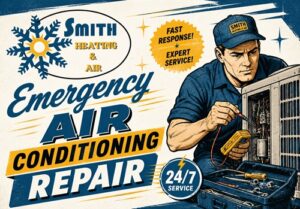
Emergency Air Conditioning Repair
Call for emergency air conditioning repair when you notice smoke, burning odors, sparking, overheated wiring, major water leakage, or complete cooling loss during dangerous heat. You should also request immediate service when the system creates unusual sounds and odors that suggest electrical or mechanical failure.
Fast action can reduce the risk of fire, water damage, compressor failure, and costly secondary repairs. It can also help restore safe indoor conditions before heat exposure becomes a health concern.
Warning Signs That Usually Require Immediate Service
Some symptoms indicate a level of risk that homeowners should not ignore. Turn off the system and seek urgent help when you notice any of the following:
- Smoke, sparks, or a strong burning smell
- Loud buzzing near electrical components
- A breaker that repeatedly trips after one reset
- Rapid water leakage near wiring or ceilings
- Extreme heat coming from panels or equipment
- Complete cooling loss during dangerously hot weather
- Hissing sounds with visible refrigerant line damage
- Symptoms of heat-related illness inside the home
Do not continue running the system when these warning signs appear. Operating damaged equipment may turn a repairable issue into a larger and more expensive failure.
Problems That May Wait for a Standard Appointment
Some air conditioning issues require professional attention but may not create an immediate safety risk. These problems can often wait for a regular service appointment when the home remains comfortable and the equipment shows no signs of electrical or water danger.
Examples include one room cooling unevenly, mild airflow reduction, a thermostat reading that seems slightly inaccurate, or a system that runs longer than usual. A minor increase in energy use or an occasional noise should still be checked, but it may not require after-hours service.
What to Check Before Calling
A few safe checks can help rule out simple causes before you request urgent service. Confirm that the thermostat is set to cooling, the temperature is set below the room temperature, and the system has power.
You can also inspect the air filter and look for a tripped breaker, but reset the breaker only once. If it trips again, leave it off because repeated resetting may increase the risk of equipment or electrical damage.
What Not to Do During an AC Emergency
Do not remove access panels, handle wiring, add refrigerant, or attempt to bypass a safety switch. These actions can expose you to electrical shock, chemical contact, equipment damage, or fire.
Avoid running a frozen system in hopes that it will begin cooling again. Switch it off and let a trained technician diagnose the airflow, refrigerant, drainage, or mechanical problem.
Preventing Future Cooling Emergencies
Routine maintenance can help technicians catch weak electrical connections, drainage problems, worn parts, and airflow restrictions before they cause a breakdown. It also gives your system a better chance of operating reliably during Knoxville’s hottest weather.
Replace filters regularly and keep leaves, grass, and debris away from the outdoor unit. Pay attention to changes in cooling performance, energy bills, operating sounds, and cycle length so you can schedule service early.
Call Smith Heating and Air for Fast, Professional AC Service
When your air conditioner creates a safety concern or stops cooling during extreme heat, Smith Heating and Air is ready to help. Our team serves Knoxville homeowners with careful diagnostics, clear recommendations, and dependable HVAC solutions.
Call Smith Heating and Air at 865-364-6479 or visit smithheatandair.com to request service. You can also find us at 3416 Zion Ln, Knoxville, TN 37931, for professional help restoring safe and reliable cooling.
See more heating and cooling on our Facebook page.
Smith Heating and Air
3416 Zion Ln
Knoxville, TN 37931
865-364-6479
https://smithheatandair.com/
Areas Served:
Knoxville, Fountain City, Farragut, Powell, Halls, Karns, Friendsville, Clinton, Concord, Kingston, Townsend, Greenback, Maryville, Oak Ridge, New Market, Kimberlin Heights, Corryton


No comments:
Post a Comment