

Knoxville experiences hot, humid summers, cool fall weather, and winters that occasionally bring freezing temperatures. Because of these seasonal changes, homeowners need equipment that performs well throughout the year. Smith Heating and Air helps Knoxville residents compare heating options based on their homes, budgets, and long-term comfort goals.
How Do Heat Pumps and Gas Furnaces Work?
Both systems heat your home, but they use different methods to produce comfortable indoor temperatures.
How Do Heat Pumps Heat and Cool a Home?
Heat pumps transfer heat rather than generate it through combustion. During winter, they extract heat from outdoor air and move it indoors. Even when outdoor temperatures drop below freezing, some heat remains available.
During summer, the process reverses. The equipment removes heat from inside your home and releases it outdoors, functioning much like an air conditioner.
Modern cold-climate models can maintain heating performance at lower outdoor temperatures than many older systems. However, efficiency and heating capacity vary by model and outdoor conditions.
How Does a Gas Furnace Work?
A gas furnace burns natural gas to produce heat. A heat exchanger transfers that energy to indoor air, which a blower distributes through ductwork.
Gas furnaces typically deliver warm supply air quickly and maintain strong heating output during freezing weather.
However, furnaces provide heating only. Homes with gas furnaces generally need separate air conditioning equipment for summer cooling.
Heat Pumps vs. Gas Furnaces: Quick Comparison
| Feature | Heat Pump | Gas Furnace |
|---|---|---|
| Energy source | Electricity | Natural gas |
| Heating method | Transfers outdoor heat indoors | Generates heat through combustion |
| Cooling capability | Provides heating and cooling | Requires separate AC |
| Knoxville winter performance | Model-dependent; may need backup heat | Strong performance during cold weather |
| Energy efficiency | Often highly efficient in mild weather | Depends on AFUE rating |
| Installation | Requires suitable electrical capacity and equipment | Requires gas service, venting, and ductwork |
| Indoor comfort | Often delivers steady, moderate-temperature airflow | Typically delivers hotter supply air |
| Maintenance | Heating and cooling components require service | Combustion, venting, and safety components require service |
| Best fit | Homes seeking electric heating and cooling | Homes with suitable gas infrastructure |
Neither option is automatically better. Homeowners should compare the complete installation, operating costs, and equipment requirements before deciding.
Are Heat Pumps Effective During Knoxville Winters?
Yes. Many modern heat pumps work effectively during typical Knoxville winter conditions.
East Tennessee has a mixed climate. Winter temperatures frequently rise above freezing during the day, although occasional cold snaps bring much lower temperatures.
These relatively mild winter periods create favorable operating conditions for electric heating equipment.
However, homeowners should consider three important factors:
Cold-weather capacity: Heating output may decline as outdoor temperatures fall, depending on the equipment.
Backup heating: Some installations use electric resistance heat or a dual-fuel configuration during colder weather.
Home insulation: Air leaks and inadequate insulation increase heating demand regardless of equipment type.
A properly sized cold-climate model may handle much of a home’s winter heating demand without frequent supplemental heating.
For older Knoxville homes with significant heat loss, professional load calculations help determine whether additional heating capacity is necessary.
Which Heating Option Uses Less Energy?
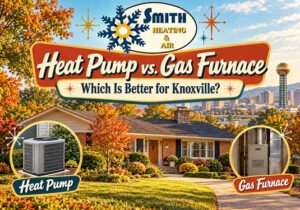 Energy efficiency is one of the biggest differences between these systems.
A heat pump can deliver several units of heating energy for each unit of electricity consumed under favorable conditions. This makes it especially efficient during milder weather.
Gas furnaces use an Annual Fuel Utilization Efficiency (AFUE) rating. For example, a furnace rated at 95% AFUE converts approximately 95% of the fuel’s energy into useful heat over a heating season under standardized test conditions.
However, efficiency does not automatically determine operating costs.
Electricity rates, natural gas prices, outdoor temperatures, equipment efficiency, and thermostat settings all influence monthly expenses.
A Knoxville homeowner with existing natural gas service may find a high-efficiency furnace economical. Another homeowner without gas service may benefit from an all-electric setup.
Smith Heating and Air can evaluate these factors and help homeowners compare realistic heating expenses rather than relying on general efficiency claims.
What Are the Installation Considerations?
Before replacing equipment, homeowners should examine their existing infrastructure.
A home with natural gas service, compatible ductwork, and a functioning air conditioner may have different replacement costs than a property using electric heating.
Important considerations include:
- Electrical capacity: Some installations require electrical upgrades, particularly when supplemental electric heat is included.
- Gas availability: Installing a furnace may require a gas connection, appropriate venting, and additional safety considerations.
- Existing ductwork: Both systems can use forced-air ducts, but duct sizing and airflow requirements must match the selected equipment.
- Outdoor space: Air-source equipment requires an outdoor unit with appropriate clearance.
- Equipment compatibility: Replacing one component may require changes to the thermostat, indoor coil, blower, or other parts.
A professional heating contractor should perform a load calculation and inspect the existing equipment before recommending a replacement.
Which System Provides Better Indoor Comfort?
Indoor comfort involves more than simply reaching the thermostat setting. Gas furnaces generally produce warmer supply air. Some homeowners prefer this noticeable warmth, especially during cold winter mornings.
Heat pumps typically deliver lower-temperature supply air over longer operating cycles. This can help maintain consistent room temperatures without frequent large temperature swings. Variable-speed equipment can improve comfort by adjusting airflow and output to changing conditions. Humidity also matters in Knoxville.
Because a heat pump provides cooling, its summer performance should be evaluated alongside its heating capability. Properly selected equipment can help manage indoor humidity during hot, muggy weather. However, oversized equipment, poor ductwork, or incorrect airflow settings can reduce comfort regardless of the system selected.
Could a Dual-Fuel System Be a Better Choice?
A dual-fuel system combines an electric heat pump with a gas furnace. During milder weather, the electric equipment provides heating. When outdoor temperatures fall below a selected changeover point, the system switches to gas heating.
This arrangement can offer flexibility for Knoxville homeowners who already have natural gas service. The changeover temperature should be selected based on equipment performance, energy prices, and comfort requirements.
Although dual-fuel equipment may cost more to install than some single-source configurations, it can be worth evaluating when replacing an aging heating and cooling setup.
How Much Maintenance Does Each System Need?
Both options require regular professional service. Because heat pumps operate during heating and cooling seasons, their components may run throughout much of the year.
Routine service typically includes checking refrigerant performance, electrical connections, coils, airflow, and system controls. Furnaces require inspections of burners, ignition components, the heat exchanger, venting, and safety controls.
Homeowners should also replace or clean air filters according to manufacturer recommendations. Regular heating system maintenance helps identify developing problems, supports efficient operation, and may reduce the risk of unexpected breakdowns.
For gas-fired equipment, carbon monoxide alarms and proper combustion venting are especially important safety considerations.
Which Heating System Should Knoxville Homeowners Choose?
The best choice depends on the individual property. A heat pump may be worth considering when homeowners want electric heating and cooling, have suitable electrical infrastructure, or are replacing both their furnace and air conditioner.
A gas furnace may be attractive when natural gas is already available, the existing cooling system remains in good condition, or homeowners prefer its cold-weather heating characteristics.
For some households, dual-fuel equipment provides a practical alternative. Before making a decision, compare installation estimates, expected operating costs, equipment warranties, and long-term service requirements.
Frequently Asked Questions About Heat Pumps and Gas Furnace
Do heat pumps work when temperatures drop below freezing?
Yes. Many modern models continue operating below freezing. However, heating capacity and efficiency vary, and some homes require supplemental heat during colder conditions.
Is a gas furnace cheaper to operate in Knoxville?
Not necessarily. Operating costs depend on local electricity and gas rates, equipment efficiency, weather, and household heating demand.
Can I replace my gas furnace with a heat pump?
Often, yes. However, a professional must evaluate electrical capacity, ductwork, heating loads, and equipment compatibility before recommending a conversion.
How long do heating systems typically last?
Many heat pumps last approximately 10–15 years, while gas furnaces may last 15–20 years or longer. Actual service life depends on installation quality, usage, maintenance, and operating conditions.
Should I replace my furnace and air conditioner at the same time?
Not always. However, replacing both may be appropriate when equipment is aging, incompatible, or inefficient. A professional assessment can help determine the most cost-effective approach.
Choosing new heating equipment should start with understanding your home’s needs, not simply selecting the most popular technology.
Smith Heating and Air provides heating services for Knoxville homeowners who want to compare replacement options, improve indoor comfort, or evaluate an aging system.
Our team can inspect your current equipment, discuss available technologies, and help you make an informed decision. Call Smith Heating and Air at (865) 364-6479 to discuss your home’s heating options.
See more heating and cooling on our Facebook page.
Smith Heating and Air
3416 Zion Ln
Knoxville, TN 37931
865-364-6479
https://smithheatandair.com/
Areas Served:
Knoxville, Fountain City, Farragut, Powell, Halls, Karns, Friendsville, Clinton, Concord, Kingston, Townsend, Greenback, Maryville, Oak Ridge, New Market, Kimberlin Heights, Corryton


No comments:
Post a Comment